A Call for Holy Dissidence
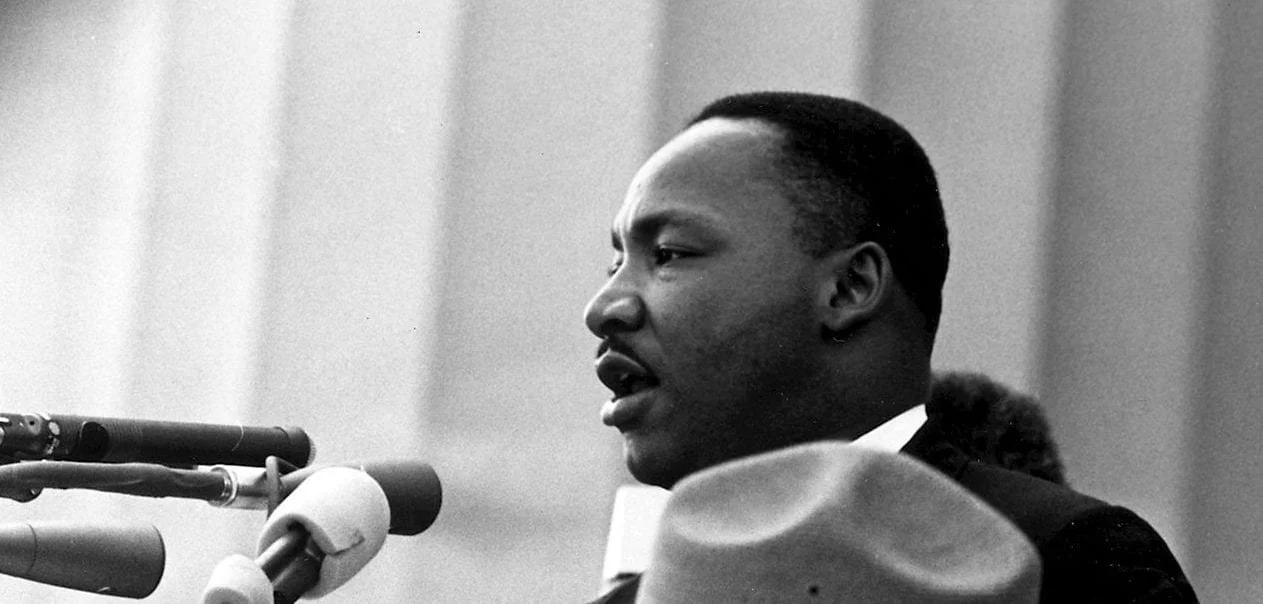
“The time is always right to do what is right.”
My brother works at West Chicago High School. He teaches ESL. It turns out he is a pretty good writer, too. He has written a handful of stories about his students. Many of them, most of them, live an uphill battle. Escaping countries from near death, working hours upon hours to help pay rent and still go to school, living in West Chicago after being in the desert for so long. Precious, resilient humans. It’s tough to find any part of their stories relatable. At least not to me. What endurance. What strength. Overcoming one barrier after another. Learning English is just one of them. Mark has shared his writings with the kids’ permission. Not just with me, but with other teachers in the school. These kids desperately need to be known. So often misunderstood, he evokes empathy through his essays. Teachers have thanked him. Everything changes once you hear the unfolding plot line of someone’s difficult journey.
This week, every year, we take a day and consider Martin Luther King, Jr. Talking about racism is imperative because the risk of normalizing it is always a reality. Some may call a conversation around racism political. But the conversation, the honest look, the longing for wrong to be made right…is a holy thing. This is a Kingdom-of-Jesus-thing. When people are mistreated and handled in an unethical manner, we have fundamentally lost our way; we have become animals.
We will always need to pay attention to our drift into pride and superiority. All of us.
“But my people would not listen to me. They kept doing whatever they wanted, following the stubborn desires of their evil hearts. They went backward instead of forward.”
Racism reveals the toxicity of our inability to see others through the lens of God’s goodness and the delight he has for every detail of his creation. It’s nothing less than a level of insanity for followers of Jesus. Think about it, we assign value based upon the culture in which people were born, their accent and skin color, or the food they eat. We decide that there are people God created, who bear his image, who are worth less. Racism mostly swells when we don’t actually see people. Once you hear, “My grandparents left their home and packed up everything they owned into 3 suitcases and made their way by train to…” or, “My great uncle played the piano during the peak of the Harlem Renaissance and we have his first piano in our living room,” or, “My parents opened a restaurant in Philly when I was 13 and every day after school I worked in the kitchen. In the fall, I am going to culinary school, and I hope to be the lead chef there one day.” Stories connect us.
When we begin to see each other, we want to know each other. No one likes being stereotyped or misunderstood, slapped with some label that reduces them to a one-dimensional figure.
We are all Human, after all. We ache for connection.
I long for heaven when ego and superiority completely dissolve. It’s such a nasty mess when these poisonous qualities lead the way. In me, or in everyone else. This week, as I reflect on the life and labor of Martin Luther King Jr, I have been curious about the roots of such evil. What has happened at the foundational level when we begin to blatantly dismiss another human, or an entire people group? Sadly, today, we are inundated with the message that anyone unlike you is dangerous. Another level of insanity. Unmerited fear spreads like cancer, causing division and hate. And this untrue message is the very message that results in conflict and tension.
Most of us look back at slavery and cannot believe it actually happened—people owned like property, given no pay, beaten and abused when not submitting to unacceptable demands. Not allowed to learn to read. Not allowed to keep their own name. What in the world?
And even more, how did Christians ever justify such an atrocity with Scripture? But they did. The Lord knew we needed an intervention. We needed the wisdom and courage of a man who would finally say, “Enough.” MLK is a hero. We need more heroes, fewer “influencers.” Our world needs someone to step in and be willing to help forge the way to freedom. God brought Moses into this work, too. That moment in front of the burning bush, God called Moses to free God’s people from their abusers,
I have indeed seen the misery of my people in Egypt. I have heard them crying out because of their slave drivers, and I am concerned about their suffering. So I have come down to rescue them from the hand of the Egyptians and to bring them up out of that land into a good and spacious land…And now the cry of the Israelites has reached me, and I have seen the way the Egyptians are oppressing them. So now, go. I am sending you to Pharaoh to bring my people the Israelites out of Egypt (Exodus 3:7-10).
The message of the entire Scripture has been about freedom. Paul says it plainly, “It is for FREEDOM that Christ has set you free.” Freedom from our greed, freedom from our pride, freedom from the destructive pull of power, freedom from shallow relationships, freedom from false guilt, freedom from purposelessness, freedom from pain and suffering, freedom from hate, freedom from control, freedom from selfishness, freedom from the oppressiveness of others, freedom from abuse, freedom from mistreatment, freedom from sorrow, freedom from racism…
Let’s not miss the theme of every prophet: Care for the ones who have been forgotten or mistreated, care for the ones who have nothing, care for them whether you think they deserve it or not. Don’t protect your own wallet; give it away.
And when we free others, we ourselves will be free.
Look at this orienting passage in Isaiah 58. There is no way to misinterpret these words, my friends:
No, THIS is the kind of fasting I want:
Free those who are wrongly imprisoned;
lighten the burden of those who work for you.
Let the oppressed go free,
and remove the chains that bind people.
Share your food with the hungry,
and give shelter to the homeless.
Give clothes to those who need them,
and do not hide from relatives who need your help.
“Then your salvation will come like the dawn,
and your wounds will quickly heal.
Your godliness will lead you forward,
and the glory of the Lord will protect you from behind.
Then when you call, the Lord will answer.
‘Yes, I am here,’ he will quickly reply.
“Remove the heavy yoke of oppression.
Stop pointing your finger and spreading vicious rumors!
Feed the hungry,
and help those in trouble.
Then your light will shine out from the darkness,
and the darkness around you will be as bright as noon.
The Lord will guide you continually,
giving you water when you are dry
and restoring your strength.
You will be like a well-watered garden,
like an ever-flowing spring.
Some of you will rebuild the deserted ruins of your cities.
Then you will be known as a rebuilder of walls
and a restorer of homes.
“Then you will be KNOWN as a rebuilder of walls and a restorer of homes.”
Quiet self-reflection forces us to ask the question: “Am I a rebuilder and restorer, or am I the oppressor?” Do I stand up against the oppressor, or do I defend him? John Steinbeck, in East of Eden, one of the greatest novels ever written, contrasting good and evil, opens Chapter 34, interrupting the narrative with this profound reflection—take the time to read it:
A child may ask, “What is this world about?”
A grown man or woman may wonder, "What way will the world go?
How does it end and, while we're at it, what's the story about?"
I believe that there is one story in the world, and only one, that has frightened and inspired us…Humans are caught-in their lives, in their thoughts, in their hungers and ambitions, in their avarice and cruelty, and in their kindness and generosity too—in a net of good and evil. I think this is the only story we have and that it occurs on all levels of feeling and intelligence. Virtue and vice were warp and woof of our first consciousness, and they will be the fabric of our last, and this despite any changes we may impose on field and river and mountain, on economy and manners. There is no other story. A man, after he has brushed off the dust and chips of his life, will have left only the hard, clean questions: Was it good or was it evil? Have I done well or ill?
What about me? What about you? We would do well to keep this question on repeat. Before I crawl under my covers…”Have I done well or ill?” It is not just my response to people who live on my street, who I overlap with in the food store, or the kids in my school…it is the stance I take against evil. It is the way I speak about the atrocities going on. It is evident by who and what I defend. To be clear, when someone defends obvious evil, the sane and brave must stand up.
May I be found on the side of Isaiah 58. May I align myself with the Kingdom of God and not that of the Strong man who is insecure, cowardly, and cruel…willing to do anything to maintain his power. May I be like MLK, peaceful in my approach but resolute in my conviction. Selfless for the sake of human dignity.
Here we are, my friends. It is 2026, and we are moving backwards, justifying the same evil MLK bravely protested. For those of us who have friends who are working directly with immigrants and refugees in America, or in the school system, or the church, or anywhere else, it is clear that we are in a humanitarian crisis. I can’t be silent on this issue since silence is how we end up repeating the parts of the past we are never meant to repeat.
Part II~
Our Robotic Society: A Set-Up for Racism
Racism is not just a dislike for people who are different from us. It goes deeper than that. Part of the problem is that it requires turning off the noise to sit and consider the underbelly. We spin in busyness and noise. Being thoughtful demands self-reflection and curiosity, but that won’t happen unless we slow down. This is in no way an exhaustive appraisal of the problem, but only one angle of the problem we face in modern America. There are a few factors changing everything today, making it so much easier to dismiss others and even despise people to the point of treating them like non-humans. The reality is, in our technological entanglement, we are less human. Since the enemy has no power over the Creator, he goes for the reflection of Him, the image of God stamped into us.
When we disconnect from our humanness, we are at risk of turning on one another.
“What are we? Humans? Or animals? Or savages?”
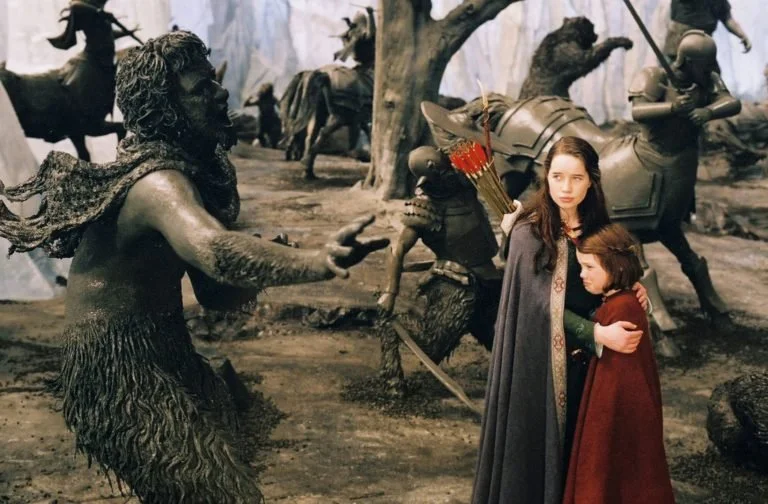
The White Witch in Narnia had a tactic and drive. She set out to take the Kingdom for herself, to own what rightly belonged to Aslan. Bit by bit, she turned those who were a threat, all the people and creatures loyal to Aslan, into stone. Brilliant idea, Lewis. It works. We can treat people anyway we want, disregard them, shun them, harm them, mistreat them, call them names, if we take away their heart and soul, if we turn them into stone. It is truly the only way we can relate to people as things. The irony is that when we treat people like things, we become things.
“I will give you a new heart and put a new spirit in you; I will remove from you your heart of stone and give you a heart of flesh.”
This is not a new problem, but one we have chosen to ignore and minimize, even when history reveals the horrors we are capable of. The past flashes red warning lights on the dashboard. There are aspects of our modern society that set us up to turn people into stone. To become stone, ourselves. We have lost attachment and connection. And most days, we don’t even know it is happening.
When we understand how it works, we have the potential to be wise and push against the machine.
Entertainment overload-In a cultural time that values entertainment at any cost, we are out of touch with the value and dignity of people. Everyone is up for grabs if we can get a good laugh. The stream of ongoing entertainment in our cars, living rooms, pockets, computers, and airplanes numbs us. Not a dip into it here and there, but a stream of it. This escape from uncomfortable emotion, personal conviction, or empathy for someone else’s plight is literally everywhere. We don’t have to work to dodge it; we swim in these waters. As a counselor and someone who has received much counseling, it is clear that God’s primary way of fostering attachment between people is through vulnerability and focused presence. Laughter is good, entertainment is not all bad, but when it consumes us, we turn to stone.
Technology overload—Our dependency on all things technology has resulted in false connection. We are less embodied. Our goal is efficiency and ease, comfort and abundance. Do more with less effort. We ask computers to keep our shopping list, turn on our lights, and perform tasks we used to do with our own backs, hands, and legs. Jesus intentionally came as a human being into the world. He remains human to this very hour. It’s mysterious, but it’s true: Embodied people are real people. Our electronic world has made us busy, numb, and robotic. The cost is high. To be sure, getting off screens is not a guarantee that any of us will be kind or appreciative of others. But an overload of technology is a guarantee to shut off parts of us that need to grow so we can bond with others. Fully alive, that’s what we are made for:
Hearing the birds click their wiry feet on your widow sill, embracing someone when tears are streaming down their face, feeling the sting of hurt, tasting the sweetness of chocolate chip cookie dough ice cream, sitting by the fire with a friend and a glass of wine, listening to the piano through my wall as my neighbor plays “Oh, the sweet, sweet love of Jesus,” filling the feeders when the real feel is 9, the smell of coffee floating up to my bedroom to wake me, dirt under my fingernails after planting rosemary in the pot, hearing the rush of 30 plus geese honking in formation above me as I walk my dog, writing a hand-written note, tasting a cherry tomato right off the vine, playing hide and seek with a child, walking the preserves as the trees just start to dry into their fall colors, sitting around the fire pit with neighbors, shoveling the snow three times when it falls all day long and while you’re at it, shovel your neighbor’s, smelling the roast in the crockpot when you walk in the door, folding laundry, looking into the eyes of someone who is sharing their pain with you, being together in the same room with no distractions and fully engaged in conversation, praying with a friend who feels stuck, the song at just the right time, making a meal for someone who just had surgery, setting up the watercolor paints on the dining room table, sitting with those in pain, laughing when you least expect it, rescuing the wounded egret you spotted while kayaking…
Real life with real people. Participating in the now. Stewarding Creation. Connected to each other, to God, and to his good creation. Connected to ourselves. It’s hard to hate people when you are in touch with your own humanity. It’s unnatural to hurt innocent people when you also feed the birds before a snowstorm or ready your soil for a garden at the start of spring. When we cultivate real life, we want to do it everywhere.
Sad news overload—What level of information can we actually carry? Before worldwide, 24-hour news programming, we got deposits of facts. Now we stand under the Niagara Falls of information. Flooded with negativity. Another mass shooting, a train derailed in Spain, fires out west, floods in the south east, statistics of starvation, and fatal car accidents slowing traffic on I95. Too much. And we can’t carry it, our empathy goes into overload, and we are paralyzed. No wonder the entertainment industry has taken off. With so much pain and suffering in the world coming at us from every corner of the earth, and in our own circles, our spirits are deflated and stuck. We are meant to live on our street, go to our church, work at our jobs, and care for those in our families. I don’t know all the research on this, but I have enough common sense to notice what a stream of ongoing news is doing to my psyche and my soul. Fearful, anxious, and depressed, we try to swim in the deluge of heaviness. And all the while, we have nothing left to give our friends, spouses, and family members. This is not about living with our eyes and ears shut; this is about managing how much we take in. The blessing of margins and reserves results in being present with those who check us out at the food store, our mailman, our co-worker, the waitress, the bartender, and my neighbor with three kids. Too often, we are taken out of our home and street, and into the whole wide world, all of which we are powerless to control.
I listened to a thought-provoking podcast a few weeks ago where Russell Moore interviewed Paul Kingsnorth, who has a fascinating story. As Moore puts it, Kingsnorth is a “former pagan turned Orthodox Christian,” and deeply thoughtful about the topic of how technology is dehumanizing us. He would even call it an attack against God’s creation. And, he makes quite a case. Somehow, he tells the truth regarding the state of things, and yet remains “oddly hopeful.” I want to read his book, Against the Machine, where he addresses not only what is actually happening, but also what it looks like to be people who cultivate a new way forward…a new way with ancient roots. I am reminded of Jeremiah 6:16—
This is what the Lord says:
“Stand at the crossroads and look;
ask for the ancient paths,
ask where the good way is, and walk in it,
and you will find rest for your souls.”
So, my friends, let’s stand at the crossroads and look around. Let’s listen for the wind of the Spirit directing us on where to go, what to do next. Let’s not assume we know the “good way.” We must ask what it is. Let’s push against the machine. Kingsnorth describes faithfulness in this time so well…
This, in practical terms is the slow, necessary, sometimes boring work to which I suspect people in our place and time are being called: to build new things, out on the margins. Not to exhaust our souls engaging in a daily war for or against a ‘West’ that is already gone, but to prepare the seedbed for what might, one day, long after us, become the basis of a new culture. To go looking for truth. To light particular little fires—fires fueled by the eternal things, the great and unchanging truths—and tend their sparks as best we can.
I am not sure what I will build, nor do I know exactly how to prepare the seedbed. But what I am more and more aware of is that it doesn’t take much to be a contrast today.
Lord, preserve my humanity and empathy. Keep my heart soft, and when ego comes in, and I begin to harden like stone, soften me with your Spirit, influence me with your kindness, humility, and selflessness. For “Your Kingdom come on earth as it is in heaven,” is the unity and community of your Creation— “from every nation, tribe, people and language, standing before the throne and before the Lamb." Come, Lord, Jesus!