Fifth Sunday in Lent: The Excruciating Hike.
“Therefore, since we are surrounded by such a great cloud of witnesses, let us throw off everything that hinders and the sin that so easily entangles. And let us run with perseverance the race marked out for us, fixing our eyes on Jesus, the pioneer and perfecter of faith. For the joy set before him he endured the cross, scorning its shame, and sat down at the right hand of the throne of God. Consider him who endured such opposition from sinners, so that you will not grow weary and lose heart.”
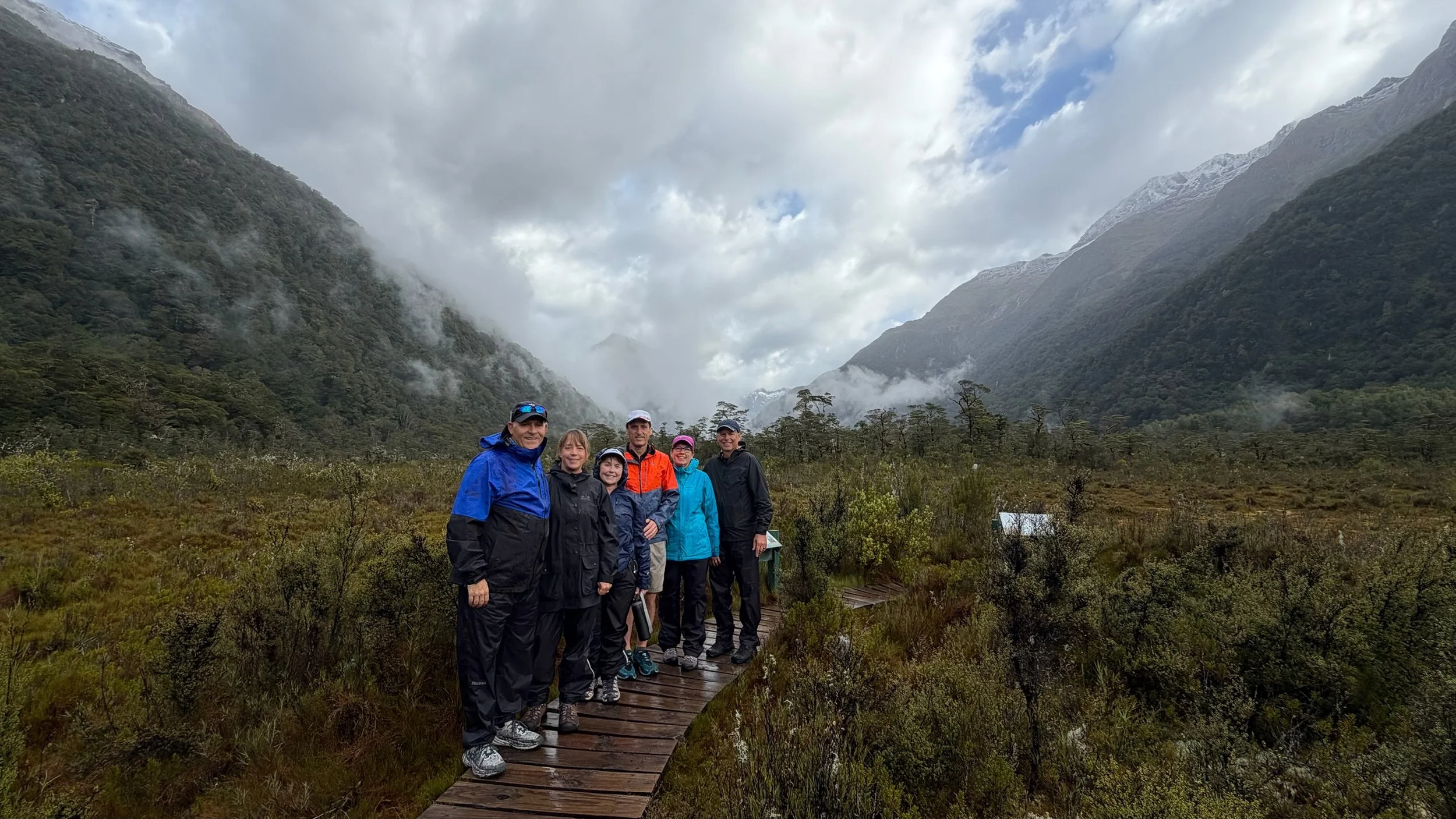
33.3 miles.
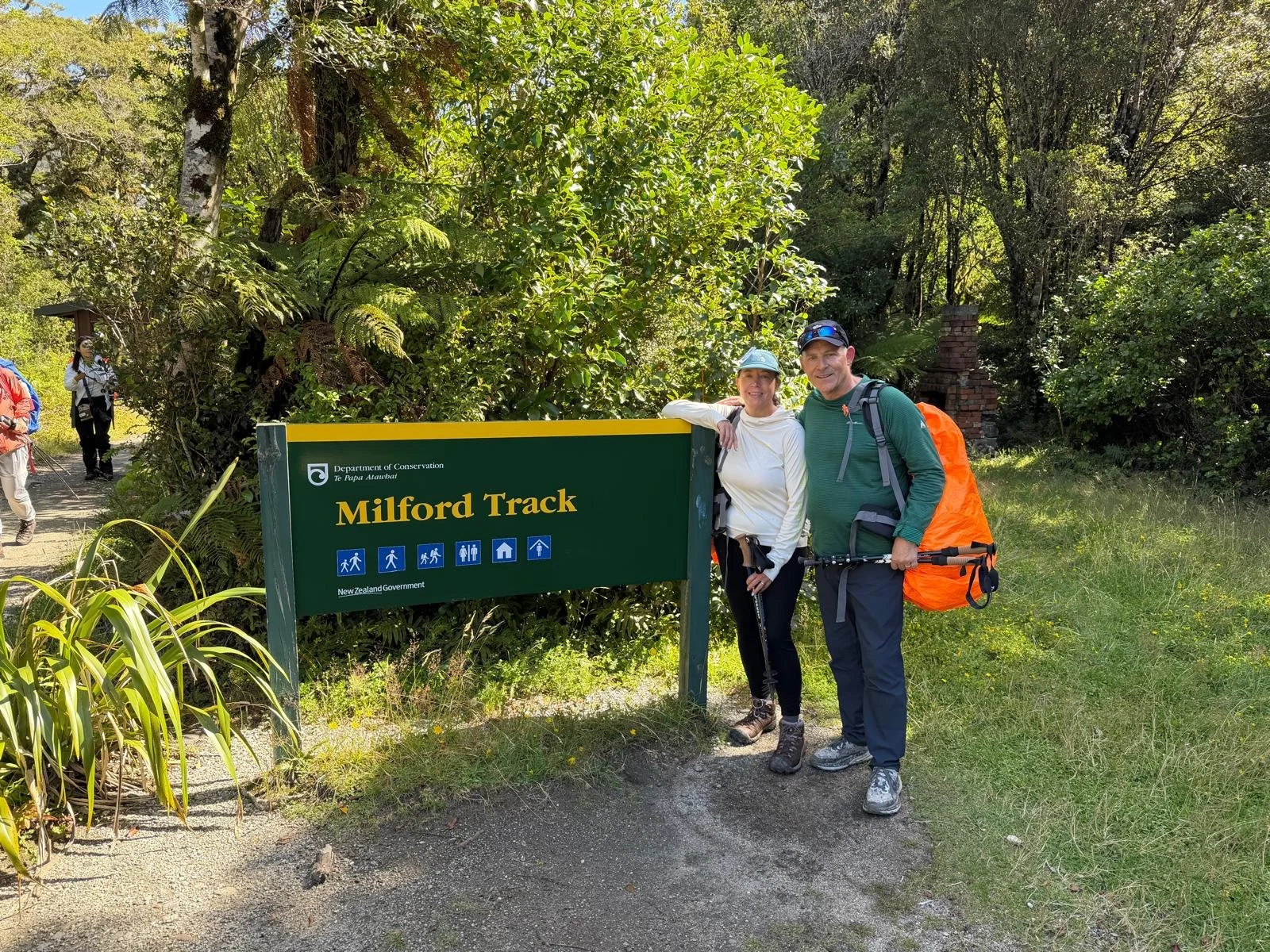
That’s how long the Milford Hike is. One of the most beautiful spots in the world to walk. It is also excruciating. My sister and her husband, Greg, went to New Zealand with a few friends for 3.5 weeks, a trip of a lifetime. Their trip concluded with this hike through Fiordland National Park. Day 1: 1 mile (easy, enough 🙂). Day 2: 10 miles (😕). Day 3: 9 miles, described as the hardest day of the hike, “Steep uphill following zigzags to Pass Hut on rocky uneven track and steep downhill to the lodge…This is a very challenging day and can be affected by weather.” (😫). Day 4: 13.5 miles “with sections prone to flooding” (😵💫😟😭).
Once they got service, our family text thread looked something like this:
Greg: “We made it to the end, never again. I am so proud of Kim!! Our bodies are so sore. I can barely walk.”
Kim: “My legs are like a 100-year-old woman! Lol! But they will get better…”
For the next few days, when we asked Kim about her knees…”My legs are killing me, and I may need to borrow Mom’s extra walker!”
Even up to last night when I asked how her body feels…”My knees still hurt a little bit when I come down our stairs!”
My sister’s words: “They describe the difficulty level of this hike as ‘intermediate!’ But this was NOT intermediate!” She went on to tell me that the guides have to call a helicopter in twice on average, per week, to take someone out! That’s assuming the helicopter can even get to the spot where someone needs help. A mere $1700 a pop. This hike was no joke. As Kim and Greg showed us pictures and described their experiences, I felt as if I were watching a documentary of survivor stories. They both said at points along the telling, “It took everything in us to get to the end.” Rain, cold, knees about to split, packs upwards of 20 pounds weighing down their backs…the pain was intense…
“I literally had to keep telling myself, just take the next step,” Kim said more than once.
Along rocky ridges, wet from rain, on day 3, cliffs only feet off to the side that made Greg dizzy with panic (he’s afraid of heights!), no rails, pounding hearts, exhaustion. Why would anyone want to do such a thing? Kim said to her friend Lynda, eyes weary, bent over, soaked from rain, losing their minds, “We paid a lot of money to do this to ourselves, what were we thinking?!”
Surrounded by vistas and lush green valleys, they looked down most of the time. The trail was rocky and awkward. It wouldn’t take much to slip and break an ankle. In the middle of the nearly paralyzing fatigue and burnout, Kim would hear Lynda say,
“Stop for a second, Kim…Look up.”
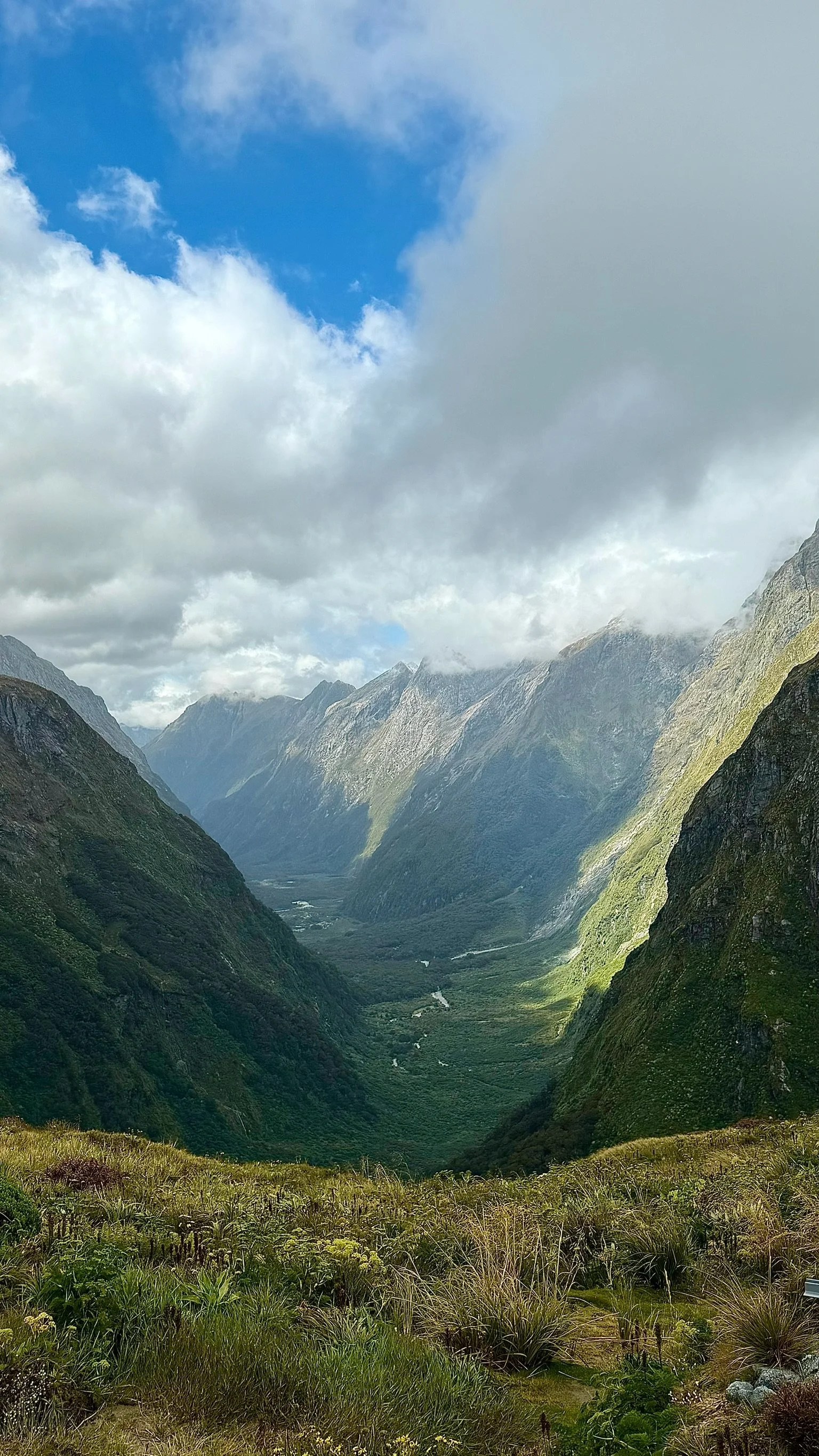
They came to the third day, now legitimately worried if their bodies could endure; this would be the most challenging of them all. They would hike 9 miles up and over the Omanui / MacKinnon Pass—an endless stretch of rocks stacked in steep order. The strain going up was intense, and the pressure on the knees going down was worse. How do you take another step when it feels like spikes are going through your calves, knees, and thighs? They had no choice. On repeat, they empowered one another to get through the next leg. At times laughing, at times nearly crying, a bonding memory they will certainly reference for the rest of their lives.
“Faithless is he that says farewell when the road darkens.”
The guide assigned to Kim’s group was named Hope. Oh, the beautiful irony. She is 25 years old and wildly resilient. But more than that, she offered strength. Her presence was kind and patient. Her will was sturdy when their bodies were bending over. Hope, in every sense, is what they needed. Hope is what we all need.
[As a remarkable side note, one of the guides, Susan, is 61 years old and does this hike every single week. Kim told me the average age of people who do this hike is in the 70’s!! The second is the 60’s, and third, the 50’s!]
There is a reason we liken life to a “journey.” The word is sadly now cliché, so the power of the image, with the rugged parts, the scary parts, the weary parts, and the rewarding joy in the overcoming, gets lost in its overuse. But I had a renewed perspective on this image after Kim and Greg shared their testing experience with us. A journey is gratifying, but it is grueling. There are stretches we feel wholly unable to bear. It takes us to our limits. What was clear was that they needed each other. They needed to stop and rest. They needed to sleep really hard. They needed good food. They needed to remind each other they could get through the next mile. They needed professional guides! Sometimes, people need a helicopter rescue.
The season of Lent assumes long-suffering and sacrifice. Blood sacrifice, ultimately.
Jesus would shed blood for the salvation of the world. He himself said it: to gain life, you must first lose it. In our culture of fear, we grip tightly. Like orphans, we believe we are on our own; it’s all up to us. Self-sufficiency characterizes us, and we miss the provision of the presence of Jesus. We buffer our need for faith by trying to do it all on our own. God is mostly our last resort. But suffering is the soil for supernatural connection with one another and the Lord. Kim needed Lynda. Lynda needed Kim. They all needed Hope. Our vulnerability has the potential to attach us to God, to experience him as Father and comforter in a way that self-reliance doesn’t. The truth is, I don’t like the hard parts of the hike. But I have come to believe that I can HATE them and VALUE them at the same time.
The Apostle Paul said something interesting, and I am not sure I can say it, yet, myself, “I want to know Jesus and the power of the resurrection…and the fellowship of sharing in his suffering” (Philippians 3). Take note. There is fellowship when we suffer together.
Jesus endured…alone. He suffered through the entire thing, the long and arduous path of the necessary journey. He knew the whole hike, what it would require of him, how it would end…he knew the pain and the shame. He knew his friends would leave him at the time he needed them most. He knew the rejection and mockery. He knew that, at one point, someone else would have to carry the cross for him. He willingly went. Matthew describes the raw reality in his Gospel:
Then the governor’s soldiers took Jesus into the Praetorium and gathered the whole company of soldiers around him. They stripped him and put a scarlet robe on him, and then twisted together a crown of thorns and set it on his head. They put a staff in his right hand. Then they knelt in front of him and mocked him. “Hail, king of the Jews!” they said. They spit on him, and took the staff and struck him on the head again and again. After they had mocked him, they took off the robe and put his own clothes on him. Then they led him away to crucify him (Matthew 27).
We are called to endure, too. But only because we have one who endured for us. The risk of growing weary and losing heart is a real risk. We’ve watched it happen. But our companion, the Incarnated One, bears up under our sloped shoulders and steadies us, supports us; he makes the impossible possible. Somewhere, somehow, strength shows up from outside of us.
One of the Psalms of Ascent says it beautifully:
I lift up my eyes to the hills.
From where does my help come?
My help comes from the Lord,
who made heaven and earth.
He will not let your foot be moved;
he who keeps you will not slumber.
Behold, he who keeps Israel
will neither slumber nor sleep.
The Lord is your keeper;
the Lord is your shade on your right hand.
The sun shall not strike you by day,
nor the moon by night.
The Lord will keep you from all evil;
he will keep your life.
The Lord will keep
your going out and your coming in
from this time forth and forevermore (Psalm 121).
The season of Lent is this reminder: we are secured in the resilience of God. He will keep us.
On the last day, when Kim and Greg, with a few of their friends, reached the spot for their lunch break, Kim was done. Well, she wasn’t done, but she was done. With the last 3 miles to go, Kim knew—either I get up and go now, or I won’t go at all. “Greg, I have to get through this. I have to go now.” And with that, she took off. Able to garner some strength from somewhere in her weary and worn-out body, utterly spent body, she made it to the finish line before anyone else in her group.
The journey of life is far more like the Milford Hike than it is a meandering path through a breezy, peaceful meadow, flat and paved. It is rugged at a level we never imagined we could handle…ask Lynda and her husband, Stephen (who, days before the Milford Hike, mind you, ran a 65-mile race! He’s not normal).
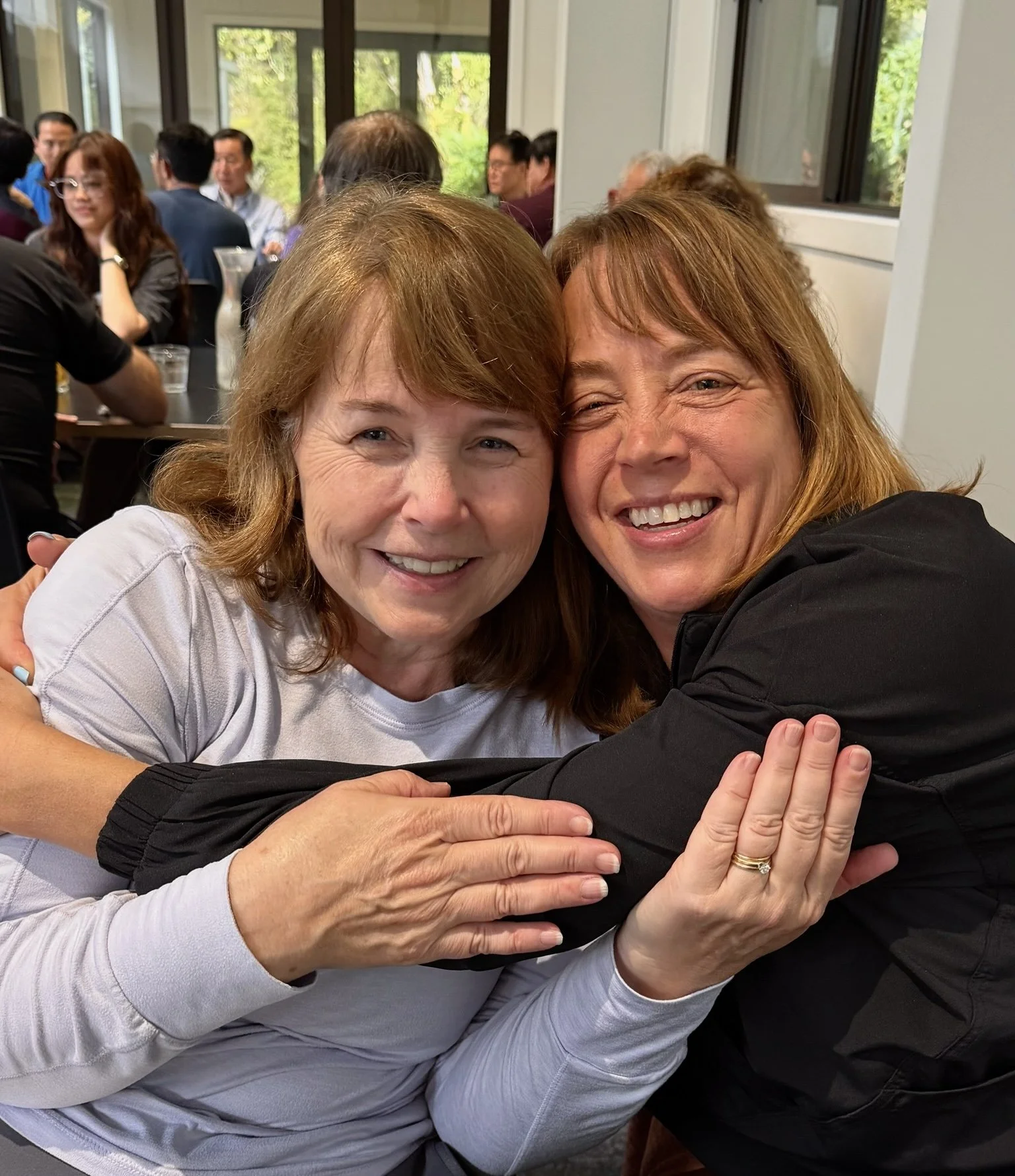
Lynda and Kim
In 2018, Lynda and Stephen lost their son Michael in a car accident. He was only 19 years old. An earthquake that cracked their lives right down the middle. They have lived “Day 3” on repeat. At one point along this hike, Lynda was reflecting on the labor of the hike, “It’s like life. You’re going along in stretches that are fairly easy, and then you hit those parts that are so hard all you can do is put one foot in front of the other…” As my sister recounted her comment to me, we both welled with tears. Coming from Lynda, these words were not the sentiment of Hallmark but the raw reality of her experience. This hike was fleshing out the journey of her own soul.
Many of you know grief like this. You know that one step is all you have in you. The late pastor, Tim Keller, in his book, Jesus the King, highlights a unique and central aspect of Christianity: God himself suffered for us.
And when you suffer, you may be completely in the dark about the reason for your own suffering. It may seem as senseless to you as Jesus's suffering seemed to the disciples. But the cross tells you what the reason isn't. It can't be that God doesn't love you; it can't be that he has no plan for you. It can't be that he has abandoned you. Jesus was abandoned, and paid for our sins, so that God the Father would never abandon you. The cross proves that he loves you and understands what it means to suffer. It also demonstrates that God can be working in your life even when it seems like there is no rhyme or reason to what is happening.
It’s impossible to imagine you will ever feel differently from how you feel on Day 3.
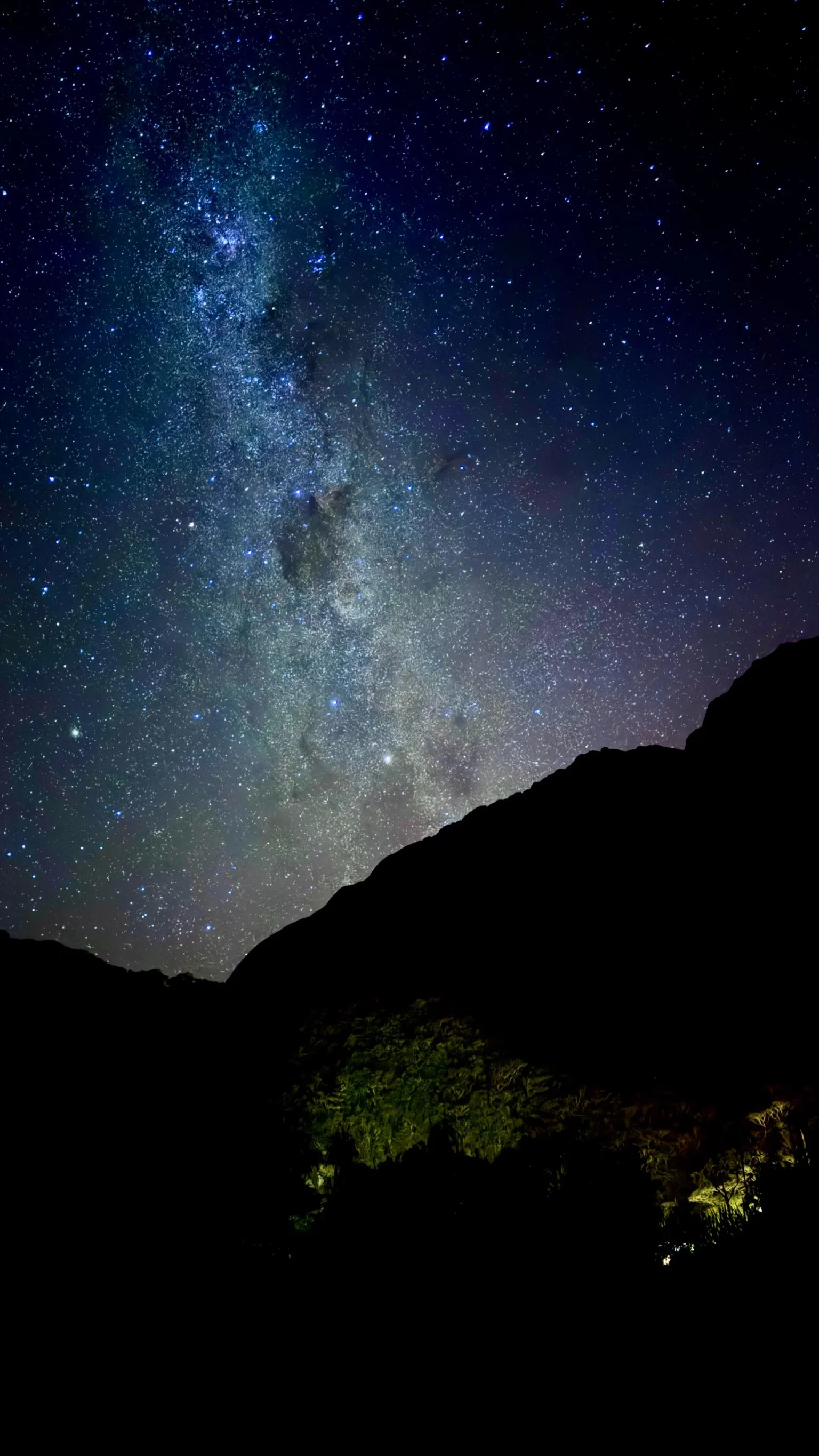
In the middle of the night, Stephen got up, set up his phone in a tripod with the hope of capturing what he saw every night. With no light pollution, he knew it would be a sight worth capturing. The darkest time of the night revealed the stars. In the middle of the night, in the middle of the hike…a gift of light.
In the rough reality of it all, sometimes we must tell each other, “Hey, stop for a minute. Look up.”
Prayer:
I think Thomas Merton’s prayer seems appropriate today…
“My Lord God, I have no idea where I am going. I do not see the road ahead of me. I cannot know for certain where it will end. Nor do I really know myself, and the fact that I think that I am following your will does not mean that I am actually doing so. But I believe that the desire to please you does, in fact, please you. And I hope I have that desire in all that I am doing. I hope that I will never do anything apart from that desire. And I know that if I do this, you will lead me by the right road, though I may know nothing about it. Therefore, I will trust you always, though I may seem to be lost and in the shadow of death. I will not fear, for you are ever with me, and you will never leave me to face my perils alone.”