Palm Sunday: Only One King.
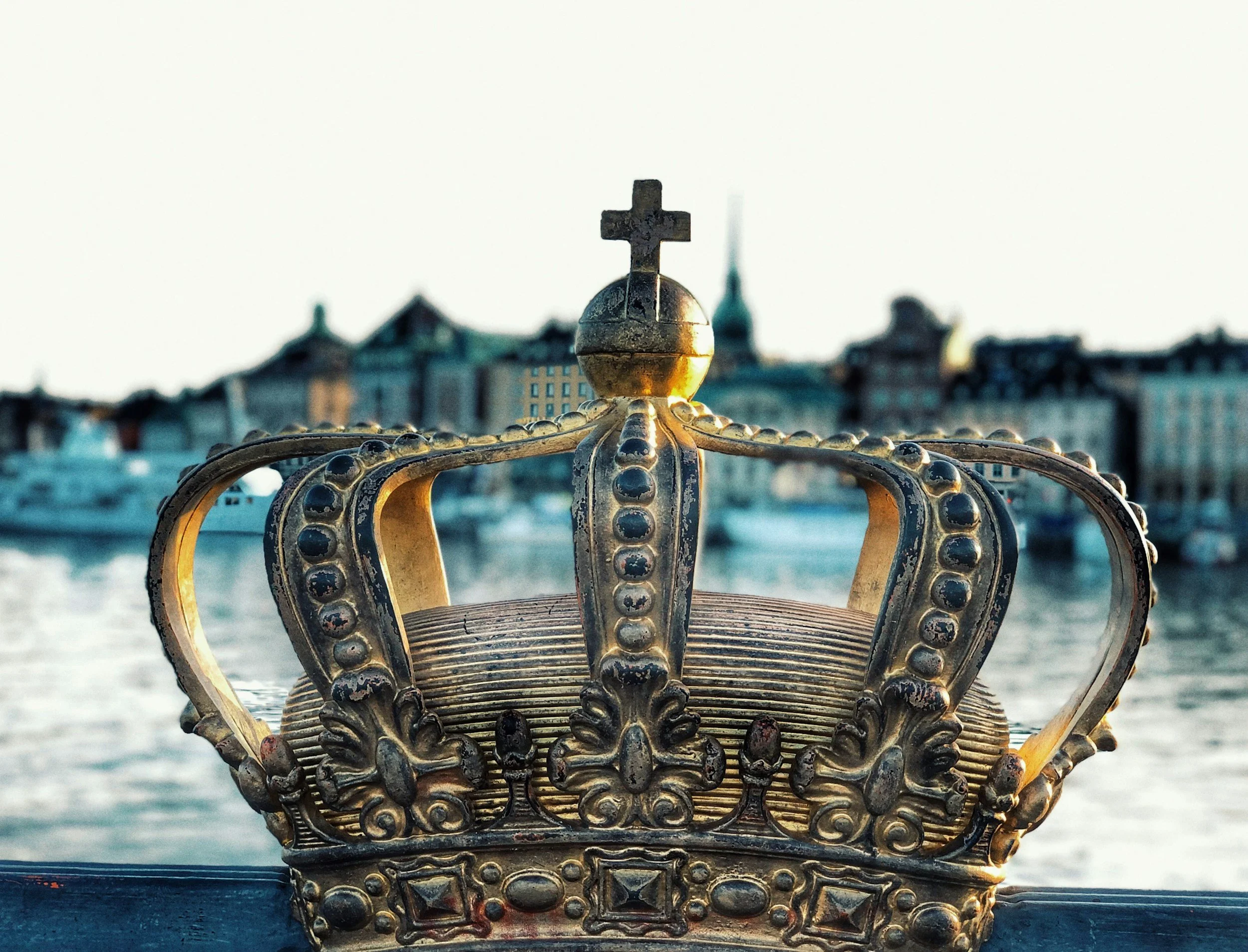
“God, we are tired of our stubborn hearts, but we sure don’t know what to do about them. Somehow stop our insensitivity. Transform these rockhard feelings that I hold so close to my chest.”
I was driving down Route 202 on my way home from work a week or so ago, tired, on autopilot. A gathering of people got my attention. On the bridge past the Malvern Exit that stretches across the highway, there were banners and signs. People lined up, waving at those of us driving by. Their banners were big and bold, the phrase, “No Kings,” painted across. Cars were honking. I’ve seen this display a handful of times over the last number of months. Maybe you have heard about these nationwide, non-violent protests. The movement is about the preservation of democracy. The slogan goes far back to the Revolution when America rejected the concept of a monarchy. This nation was to be built on strong leadership, but not a king. This is how Tom Wright from the University of Sussex puts it:
No person above the law, no office above criticism, no citizen beneath respect. The slogan reawakens the moral reflex that freedom depends on vigilance, and that dignity belongs to the governed as much as the governors.
In the Book of Daniel, Nebuchadnezzar was a king with unrestricted power. Pride like his is a stark theme from Genesis to Revelation; its condemnation is clear. And yet, Scripture is full of Kings who loved their power too much. The fallout for such barbaric pride was cataclysmic, and still is. Throughout the book of Daniel, Nebuchadnezzar spins about with his insecurity and ego—a beastly combination.
So, in his everyday life, God began to dismantle his world.
Dreams haunted him. One dream in particular disturbed him as he agonized over its meaning. Much to his disappointment, none of his wise men could interpret it. Daniel had earned the King’s favor; he placed him over the entire province of Babylon and made him head over all the wise men. Daniel was called in. This dream was about a tree of all things. In summary, the tree was tall and strong, it was full of fruit and leaves, animals gathered under its shade…until one day, a messenger from heaven came down and commanded that the tree be chopped to the stump. Let the leaves be stripped, was the command, and shake the fruit off and scatter it far away. I am guessing this part of the dream was what distressed him the most:
Let him be drenched with the dew of heaven, and let him live with the animals among the plants of the earth. Let his mind be changed from that of a man and let him be given the mind of an animal, till seven times pass by for him.
That doesn’t sound good.
Daniel had to give him the bad news…
My lord, if only the dream applied to your enemies and its meaning to your adversaries! The tree you saw, which grew large and strong, with its top touching the sky, visible to the whole earth, with beautiful leaves and abundant fruit, providing food for all, giving shelter to the wild animals, and having nesting places in its branches for the birds— Your Majesty, you are that tree!
That doesn’t sound too bad, until Daniel explained the scary second half:
This is the interpretation, Your Majesty, and this is the decree the Most High has issued against my lord the king: You will be driven away from people and will live with the wild animals; you will eat grass like the ox and be drenched with the dew of heaven. Seven times will pass by for you until you acknowledge that the Most High is sovereign over all kingdoms on earth and gives them to anyone he wishes. The command to leave the stump of the tree with its roots means that your kingdom will be restored to you when you acknowledge that Heaven rules. Therefore, Your Majesty, be pleased to accept my advice: Renounce your sins by doing what is right, and your wickedness by being kind to the oppressed. It may be that then your prosperity will continue.
He had been warned. Daniel explained to him exactly what would happen. To the detail. But after a year, it’s easy to forget and wonder if the dream was just a dream, after all. Twelve months later, King Nebuchadnezzar was standing on the roof of his palace, looking out over his kingdom, caught up in his accomplishments, impressed by his wealth, in love with himself…Can you picture him? Arms outstretched, head raised to the sky, robe open like a peacock’s feathers, his voice floating down over the fields and homes of those withering under his rule:
“Is not this the great Babylon I have built as the royal residence, by my mighty power and for the glory of my majesty?”
Reverberating throughout the palace walls…and down the streets…
It sounds like a movie, but here’s how it went…
Immediately what had been said about Nebuchadnezzar was fulfilled. He was driven away from people and ate grass like the ox. His body was drenched with the dew of heaven until his hair grew like the feathers of an eagle and his nails like the claws of a bird.
What did this moment look like? Immediately? Driven away? King Nebuchadnezzar was eating grass? The ego is a toxic thing. It demands worship. It comes with force; it is void of compassion. As the ego enlarges, it needs more fuel. Oppression is always the fallout. None of us should have this level of power; we are all susceptible to its deception and seduction.
All, but One.
Today marks the start of Holy Week. The entire stretch of Lent has been leading up to this very week. Jesus knew what he was facing. God’s plan for salvation was coming to a climax. Darkness was moving in. Jesus had predicted his death for the third time and everyone was confused. Even his closest companions went sideways with pride:
Then James and John, the sons of Zebedee, came to him. “Teacher,” they said, “we want you to do for us whatever we ask.”
“What do you want me to do for you?” he asked.
They replied, “Let one of us sit at your right and the other at your left in your glory.”
“You don’t know what you are asking,” Jesus said. “Can you drink the cup I drink or be baptized with the baptism I am baptized with?”
“We can,” they answered.
Jesus said to them, “You will drink the cup I drink and be baptized with the baptism I am baptized with, but to sit at my right or left is not for me to grant. These places belong to those for whom they have been prepared.”
When the ten heard about this, they became indignant with James and John. Jesus called them together and said, “You know that those who are regarded as rulers of the Gentiles lord it over them, and their high officials exercise authority over them. Not so with you. Instead, whoever wants to become great among you must be your servant, and whoever wants to be first must be slave of all. For even the Son of Man did not come to be served, but to serve, and to give his life as a ransom for many” (Mark 10).
Power, position, ego…driven to the top no matter who is wrecked in the process…winning at all costs…personal glory as motivation and goal….
”Not so with you.”
Palm Sunday
This is Palm Sunday; there was music and celebration. Lots of excitement. Nothing felt dark about this afternoon. Those who stood along the road as Jesus made his way into Jerusalem were all-in. They had been waiting for the Messiah to come, wielding his sword, brazen with resolve. They wanted to witness a top-notch political power move. Let Rome pay the price! It was time to take the throne. They screamed and cheered, they raised their palm branches and ushered him through with pomp and circumstance.
“Eyes to see and ears to hear…” Jesus had used this phrase enough that it seems as if he said it again here; we don’t know. Maybe here it wasn’t recorded. It’s worth noting that Mark’s account of the Triumphal Entry is preceded by the story of a beggar sitting on the roadside. He had been suffering from blindness, and he knew who Jesus was.
“Jesus, Son of David, have mercy on me!”
Those around rebuked the man, telling him to be quiet. Mercy is often offensive. People will rage against undeserved kindness if it threatens power.
“What do you want from me?” Jesus asked him.
“I want to see!”
“Go! Your faith has healed you!” Immediately he received his sight and followed Jesus along the road…
In these stories, Jesus had already established what his Kingdom was about. A Kingdom for the lowest. A Kingdom for the sinners. A Kingdom for the oppressed.
As Daniel said to Nebuchadnezzar, “Your Majesty…acknowledge that the Most High is sovereign over all kingdoms on earth…and be pleased to accept my advice: Renounce your sins by doing what is right, and your wickedness by being kind to the oppressed.”
This day, Jesus rode into Jerusalem on a donkey. Seems to be a small detail until we recall that this description was highlighted in Zechariah’s prophecy:
"Rejoice greatly, Daughter Zion! Shout, Daughter Jerusalem! See, your king comes to you, righteous and victorious, lowly and riding on a donkey, on a colt, the foal of a donkey.”
A horse was used for war, a donkey was used for times of peace. Jesus was making a statement that his Kingdom was unlike any other kingdom, and he was a King unlike all others: humble and lowly, not impulsive and insecure, not power-hungry and heartless. His reign would be established on mercy, generosity, loving-kindness, forgiveness, freedom, and hope. His would not be driven by ego and built on the backs of the poor. He would be a contrast to every narcissistic king the world had ever known or would ever know.
The palm branches and celebration quickly turned to vitriol and rage when they understood what he was about, and what he wasn’t about. The next day, Jesus turned over the tables of the money-changers in the Temple, calling them out on exploiting those who were coming with sincerity to meet God, to receive his mercy and grace. Threatened by Jesus’s defense of the lowly, they turned to resolve: “We will find a way to kill him.”
And with that, Holy Week commenced.
We are all vulnerable.
Jesus knew that no one was immune to the love of power. When one oppressive leader is removed and replaced, the next follows suit. As humans, we are in the bleak and agonizing cycle of power exchanges. Those who have been oppressed will quickly oppress once given the opportunity. As Paul said, “Who will free me from this life that is dominated by sin and death?”(Romans 7).
Only One King can.
We should all hold our banners up high and hook them to flagpoles, hang them from bridges, and yes, paste them to our mirrors: NO KINGS…
…save One.
May we welcome him today. When we reject him, may his faithfulness hold. When we want to be our own god…our own king, may his mercy be new every morning. May we say today with Bartimaeus, “Jesus, Son of David, have mercy on me!.”
The potential for each of us to be like James and John, who want power, or the Pharisees and Sadducees who used the very words of God to oppress, or Nebuchadnezzar, who used his power to make a kingdom only to please himself…is real. An yet, there is hope. Not hope that we will wise up and finally surrender, turn to God, and set our pride aside. No, we have hope because of the cross of Christ, his death and resurrection, which made transformation possible. Nebuchadnezzar’s own words affirm such a miracle:
At the end of that time, I, Nebuchadnezzar, raised my eyes toward heaven, and my sanity was restored. Then I praised the Most High; I honored and glorified him who lives forever.
His dominion is an eternal dominion;
his kingdom endures from generation to generation….”
At the same time that my sanity was restored, my honor and splendor were returned to me for the glory of my kingdom. My advisers and nobles sought me out, and I was restored to my throne and became even greater than before. Now I, Nebuchadnezzar, praise and exalt and glorify the King of heaven, because everything he does is right and all his ways are just. And those who walk in pride he is able to humble (Daniel 4).
Our humble King fulfilled the command Daniel stated to Nebuchadnezzar centuries before…”Be kind to the oppressed.” Those oppressed by their own want for power. Those oppressed by their circumstances. Those oppressed by sexual desire and fear of rejection.Those oppressed by an addiction to image, comfort, power, and prestige. Those oppressed by sorrow, grief, and endless disappointment. Those oppressed by trauma, physical illness, and financial strain. Those oppressed by the oppressors. Those who are forgotten and stuck, who feel small and insignificant, who feel aimless, hopeless, and alone.
This, my friends, is your King…
“…Who, being in very nature God, did not consider equality with God something to be used to his own advantage; rather, he made himself nothing by taking the very nature of a servant, being made in human likeness. And being found in appearance as a man, he humbled himself by becoming obedient to death— even death on a cross!” Philippians 2:6-8
——————————————————————
“The Christian God wants the intimacy of our friendship, not our fear. The Christian God comes to us with gestures of breathtaking love, hoping to eliminate our fear, not manipulate us through it. And he offers his love as the one thing in the universe capable of making an otherwise hostile cosmos into a friendly home. He offers his love as the one thing in the universe capable of freeing us from our fears” (David Benner, Surrender to Love).
Prayer:
Lord, I do not understand your love. I keep thinking I need to earn it or perform to secure it. And so my pride grows. I have no idea how often I am motivated to display my own kingdom. I am sorry, for your Kingdom is the only Kingdom that is safe and good. This week, as I consider and meditate on the darkest part of your journey, may my heart be drawn to worship you alone. More of you, less of me. Amen.