Good Friday: Can These Dry Bones Live?
Good question…
"What shall I do, then, with Jesus who is called the Messiah?" Pilate asked.
They all answered, “Crucify him!”
"Why? What crime has he committed?" asked Pilate.
But they shouted all the louder, "Crucify him!"
Matthew 27:22-23
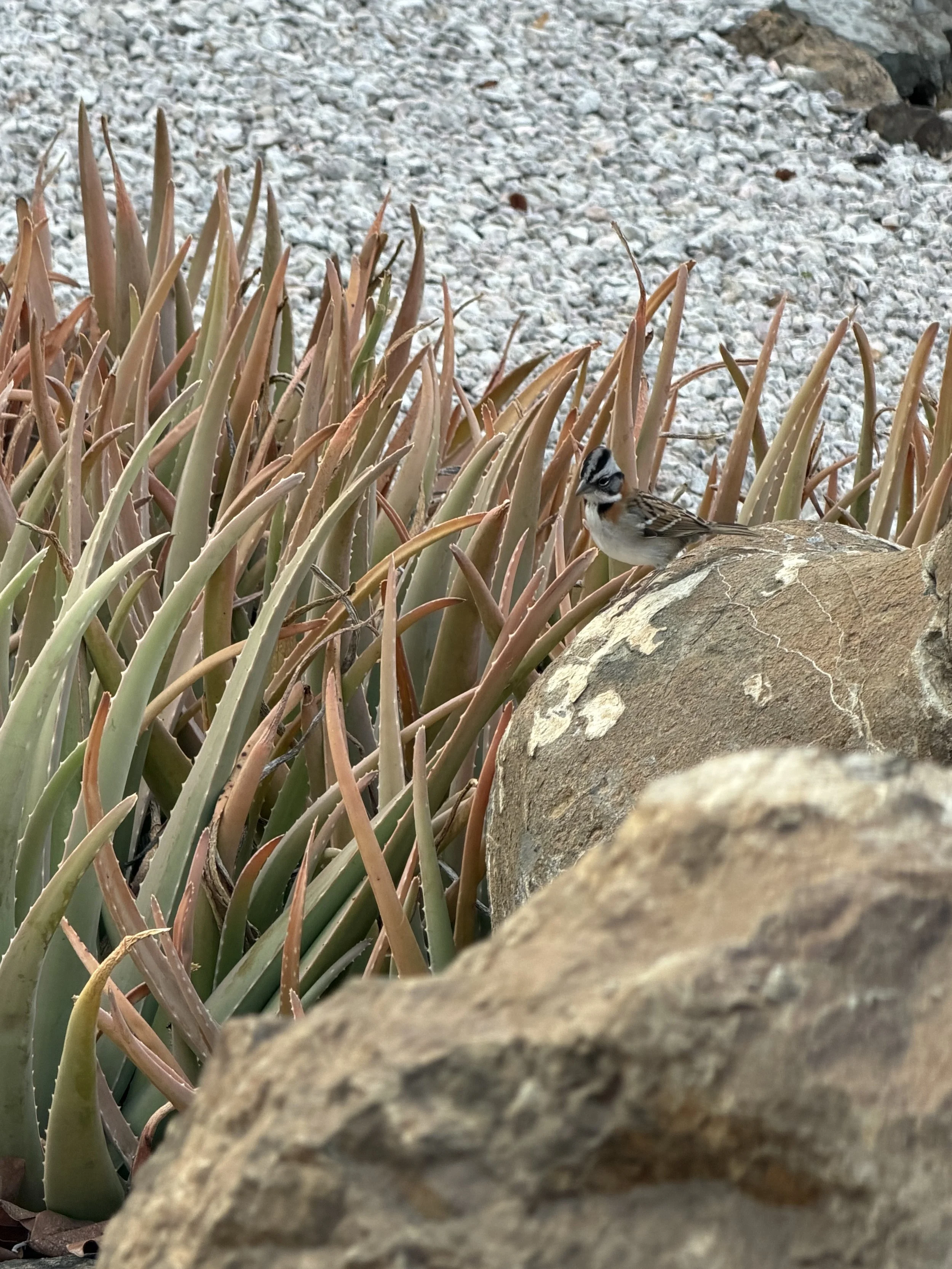
Not many weeks ago, I sat on the rocky shore of the Caribbean Sea off the South Atlantic Ocean. Curacau. If you know me at all, you know the birds had my full attention. These winged friends were full of color. The Brown-Throated Parakeet, the White-Tipped Dove, the Rufus-Collared Sparrow, the Venezuelan Troupial, the Banaquit…I’ll stop there since this would get too long if I started telling you about the long list of birds I grew attached to. Each morning, I shared my Trader Joe’s cashews with these birds…crumbling bits about the property where we stayed for a week with a few friends. They came to expect those crumbs, and no matter where I hid them, they found them.
Water is always accompanied by life. Bird-sightings are a guarantee. But a desert isn’t actually that pretty. So, I kept close to these regular visitors.


The cliffs by the beach were a different story. It may surprise you, but they were the opposite of color. I don’t even know exactly what I was seeing. I’m not sure whether I should have been disturbed by the lifeless coral dried out by the warming of the oceans, or if what I was seeing was natural and normal. As we know, natural and normal isn’t always easy to bear. This sight had my mind drifting back to Ezekiel…
“This looks like the Valley of Dry Bones,” I said to my friends.
They agreed.
A deep dive into those waters, swimming with those fish that look like Fisher-Price toys and the coral, alive, offering its nutrients to those beautiful undersea creatures…it’s tough to see the coral discarded and dead.
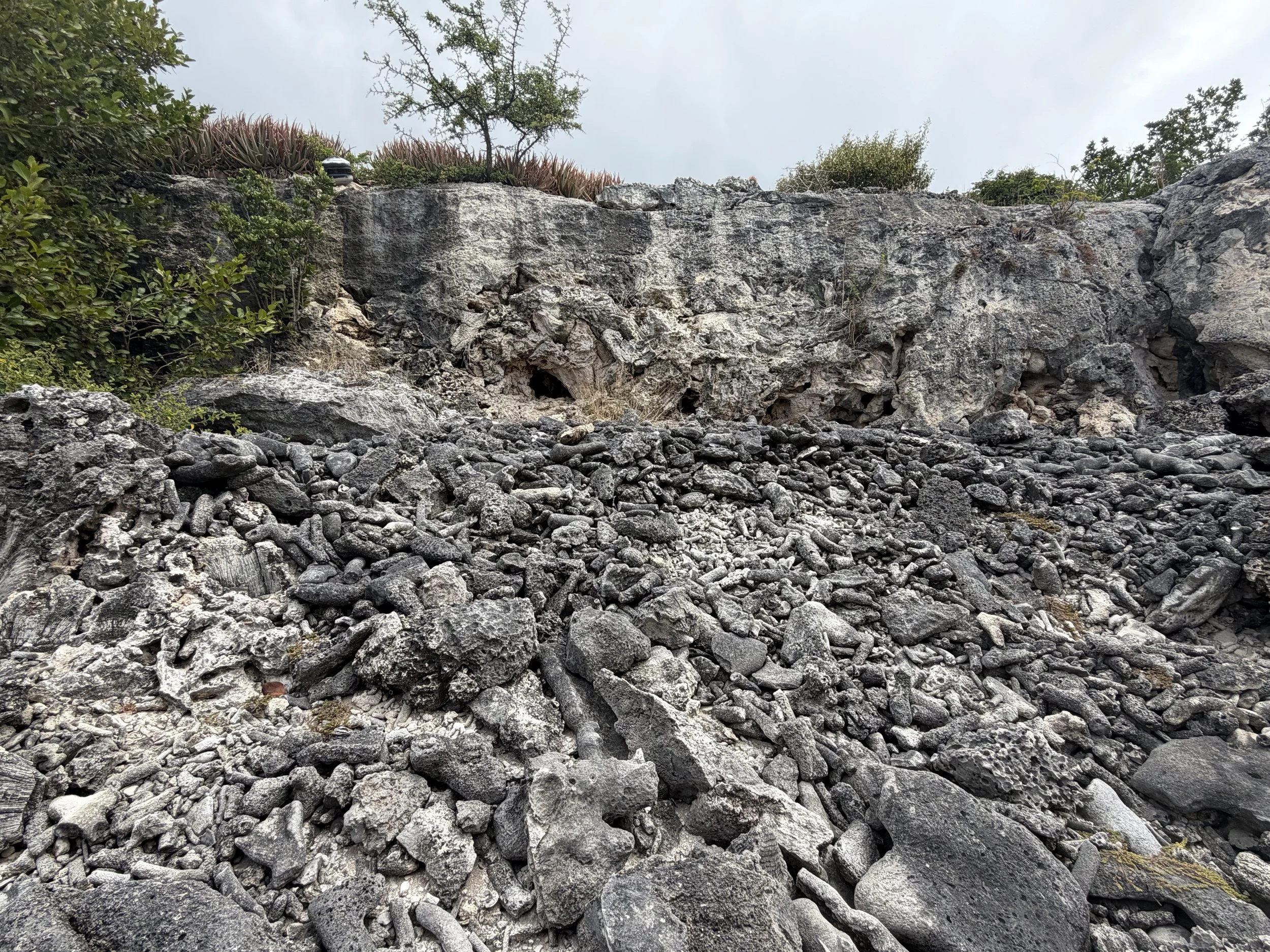
As I stood by the edge of the cliff, my imagination began to stir…I wondered what Ezekiel thought as he came upon such a sight. And what would it look like if they started to move, to crank free from their stuck places, stretching their arms, and popping up to life. Out of death and into life.
The hand of the Lord was on me, and he brought me out by the Spirit of the Lord and set me in the middle of a valley; it was full of bones. He led me back and forth among them, and I saw a great many bones on the floor of the valley, bones that were very dry. He asked me, “Son of man, can these bones live?”
I said, “Sovereign Lord, you alone know.”
We all have this question for God; maybe not the same words, but… “Will we make it?” “Am I going to be okay, ever?” “Are you good?” “Is evil winning?” “Why do the wicked prosper?” “Do you care about our suffering?” “Will you resurrect me? I feel dead inside.”
For believers in Jesus, today is the darkest day on the church calendar. Those women and men who followed Jesus around for three years were about to face a devastating loss. They had participated in his Kingdom vision, listened to him teach, observed his miracles, and had hundreds of conversations with him over meals, on walks, and in their houses…they were more and more sure: This man was the promised Messiah. They may not have understood everything, but they knew they were a part of a story that had been taught to them since they were wee little. Besides that, they loved him. He had their loyalty, and for good reason. His love was unlike any they had experienced. In many ways, it felt too good to be real.
And then this:
Jesus took the Twelve aside and told them, “We are going up to Jerusalem, and everything that is written by the prophets about the Son of Man will be fulfilled. He will be delivered over to the Gentiles. They will mock him, insult him, and spit on him; they will flog him and kill him. On the third day he will rise again” (Luke 18:31-33).
The details were shocking. But what about the big mission they all signed up for? Had they been deceived? Is he not who he said? Mocked, insulted…killed?? Rise again? Was this a metaphor? Was it a riddle?
In a matter of time, the day Jesus referenced had arrived. After the supper he shared with them, and more cryptic talk, Jesus slipped away to the garden, wracked with anxiety. Crying, sweating, afraid. His friends? Asleep. And then the plan ticked into motion by moonlight—a cold, calculated betrayal. Jesus was utterly alone at his most terrifying moment. Betrayed by one in his circle, one hooked by greed. Dragged off like a dangerous criminal, without food, without water. Rejected. Spit upon. Mocked. Whipped to the bone. Blood loss that would lead to death. Torture. Utter darkness. Hell. A mob laughing and drooling with a sick hunger for power.
…the high priest tore his robes and said, “He has uttered blasphemy. What further witnesses do we need? You have now heard his blasphemy. What is your judgment?” They answered, “He deserves death.” Then they spit in his face and struck him. And some slapped him, saying, “Prophesy to us, you Christ! Who is it that struck you?”
…And they stripped him and put a scarlet robe on him, and twisting together a crown of thorns, they put it on his head and put a reed in his right hand. And kneeling before him, they mocked him, saying, “Hail, King of the Jews!” And they spit on him and took the reed and struck him on the head. And when they had mocked him, they stripped him of the robe and put his own clothes on him and led him away to crucify him…(Matthew 27).
It’s hard to imagine this scene.
Saul, Solomon, Nebuchadnezzar…Herod Agrippa, Caesar Augustus…these kings had armies for this type of situation. They had towering walls and an expensive stock of weaponry to ward off their enemies.
But Jesus willingly handed himself over. He made it clear to Pilate:
Pilate said to him, “You will not speak to me? Do you not know that I have authority to release you and authority to crucify you?” Jesus answered him, “You would have no authority over me at all unless it had been given you from above (John 19).
This is no normal King. Jesus was establishing his Kingdom on sacrifice, humility, and non-violence.
Jesus revealed his love for a humanity that would turn away from him, reject him, mock him, and kill him. He knew that no matter what point in history, this would be the response of the human race. The slog that runs through our veins beats with the Self, “Don’t tell me what to do.” Until Jesus changes our hearts, climbing the ladder, keeping up the image, making the money, owning the power, having the name, pursuing the fame, avoiding the appearance of weakness or need…these subtly and quietly seduce us. We are all the same in this regard. And lest we be fooled, it can often look praiseworthy, noteworthy, and commendable. It can disguise itself as responsibility and hard work, deserved wages for the self-made man. It can wear the respectable robe of ministry…
Mary was altogether different.
In Matthew’s account of Jesus’s story, he sets up an interesting juxtaposition. Chapter 26 opens with the chief priests and teachers of the law literally plotting and making plans on how to kill Jesus. They had had enough. His kindness and mercy were making them uncomfortable. They were losing control.
Mary of Bethany loved Jesus. Even more, she understood who he was: a King from a different Kingdom. Matthew records the story:
Now when Jesus was at Bethany in the house of Simon the leper, a woman came up to him with an alabaster flask of very expensive ointment, and she poured it on his head as he reclined at the table. And when the disciples saw it, they were indignant, saying, “Why this waste? For this could have been sold for a large sum and given to the poor.” But Jesus, aware of this, said to them, “Why do you trouble the woman? For she has done a beautiful thing to me. For you always have the poor with you, but you will not always have me. In pouring this ointment on my body, she has done it to prepare me for burial. Truly, I say to you, wherever this gospel is proclaimed in the whole world, what she has done will also be told in memory of her.”
Two Kingdoms. That of money and power, the haves and the have-nots. Or, the Kingdom of Jesus, where death is the way to life. Where simplicity is the key to fullness. Where generosity leads to abundance. Where the lowest are the ones to be honored. This King throws his parties for the lame, the poor, the blind, and the forgotten. Mary was not threatened; she spent all she had to honor this King.
Good Friday clarifies the way of Jesus. Lest we mistake his Kingdom for that of this world, we have Good Friday. It is grounded in a trust that Sunday will come.
Our suffering is an exhausting, lonely experience. We weep in our own darkness and the darkness of those around us. It is isolating and scary. Jesus takes his place among us. He empathizes. He isn’t so caught up in his “plan” that he doesn’t feel things. Jesus is never disconnected from our humanness; rather, he is immersed in it.
His movement is always toward you.
His posture is always compassionate.
His mission is that you would receive his love that holds you in place, joins you in the night, and heals you a little bit each day.
Each of us comes to Good Friday, a heap of dry bones. Lifeless, hopeless, and lost. Entangled in our fears and sorrow, stuck in the exhausting cycle of our control, pride, and self-sufficiency. Only ONE has what we need. Only one has the power to conquer death by entering into its grave and removing all power from the Enemy of our souls.
Back to Ezekiel…
Then he said to me, “Prophesy over these bones, and say to them, O dry bones, hear the word of the Lord. Thus says the Lord God to these bones: Behold, I will cause breath to enter you, and you shall live. And I will lay sinews upon you, and will cause flesh to come upon you, and cover you with skin, and put breath in you, and you shall live, and you shall know that I am the Lord.”
And as I prophesied, there was a sound, and behold, a rattling, and the bones came together, bone to its bone…Then he said to me, “Prophesy to the breath; prophesy, son of man, and say to the breath, Thus says the Lord God: Come from the four winds, O breath, and breathe on these slain, that they may live.” So I prophesied as he commanded me, and the breath came into them, and they lived and stood on their feet, an exceedingly great army.
Then he said to me, “Son of man, these bones are the whole house of Israel. Behold, they say, ‘Our bones are dried up, and our hope is lost; we are indeed cut off.’ Therefore prophesy, and say to them, Thus says the Lord God: Behold, I will open your graves and raise you from your graves, O my people. And I will bring you into the land of Israel. And you shall know that I am the Lord…And I will put my Spirit within you, and you shall live, and I will place you in your own land. Then you shall know that I am the Lord; I have spoken, and I will do it, declares the Lord” (Ezekiel 37).
We come with nothing. We come in need. We come to a Savior who raises the dead and brings life out of nothing.
Lord, Jesus, we are here, dry bones, call us into your life.
The cornerstone of St. David’s Church in Wayne, PA, was laid in 1715. Its walls hold stories that stretch from the Revolutionary War through the inception of the Pennsylvania Railroad, and even my Great-Grandmother’s funeral service. It holds my story, too. This little chapel has been a place over the years where I have gone to meet God. Alone. They keep the doors open for this purpose. I have never walked in when someone else is there. The silence is a gift. The stillness helps me imagine. The place is a sanctuary of healing—
A few years ago, I sat in the chapel alone on Good Friday. Not one bit of color in the room. A black veil was the only decor in the room.
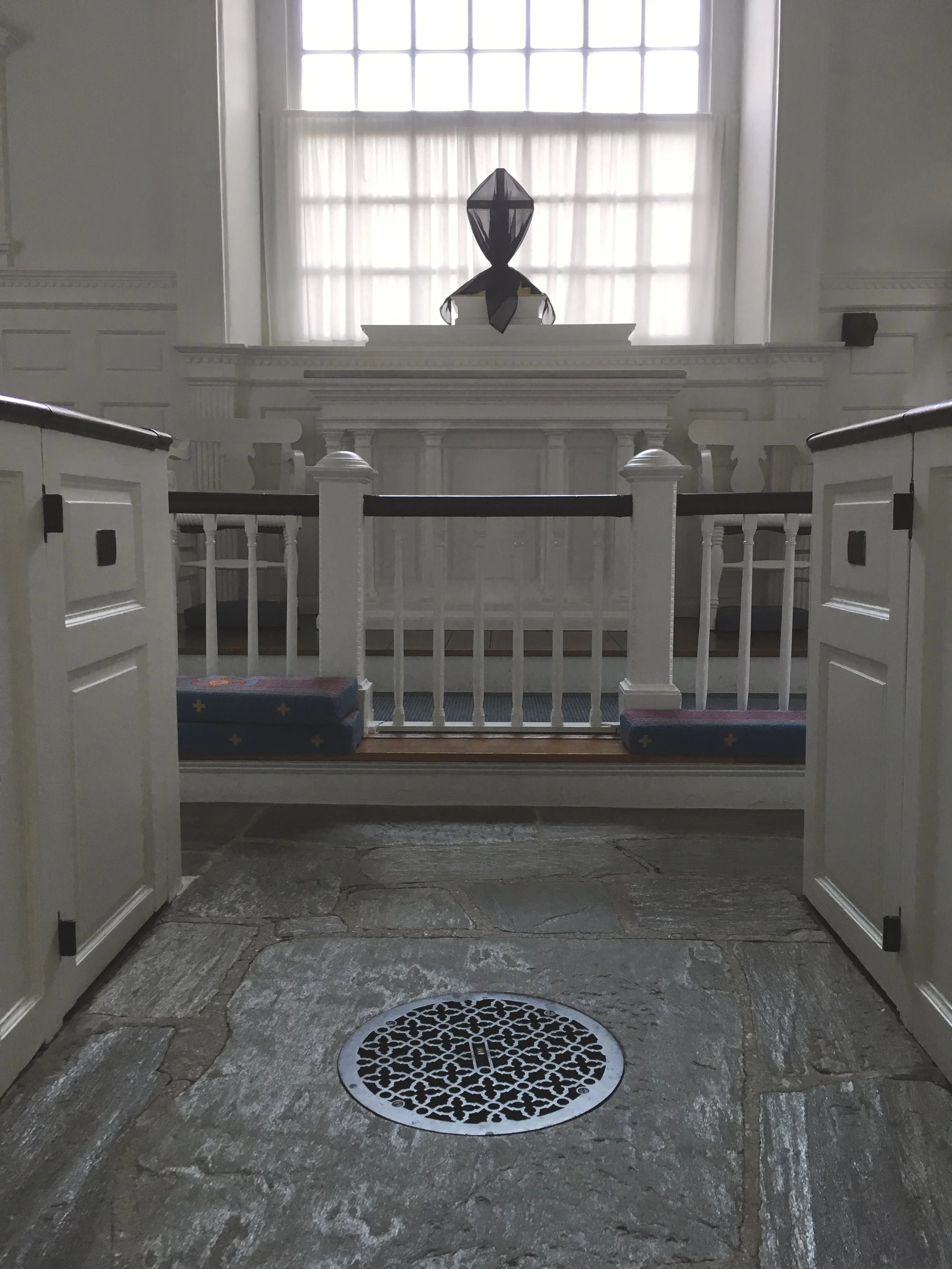
St. David’s Episcopal Church (Henry Wadsworth Longfellow penned a poem about this old chapel, “Old St. David’s at Radnor.”)
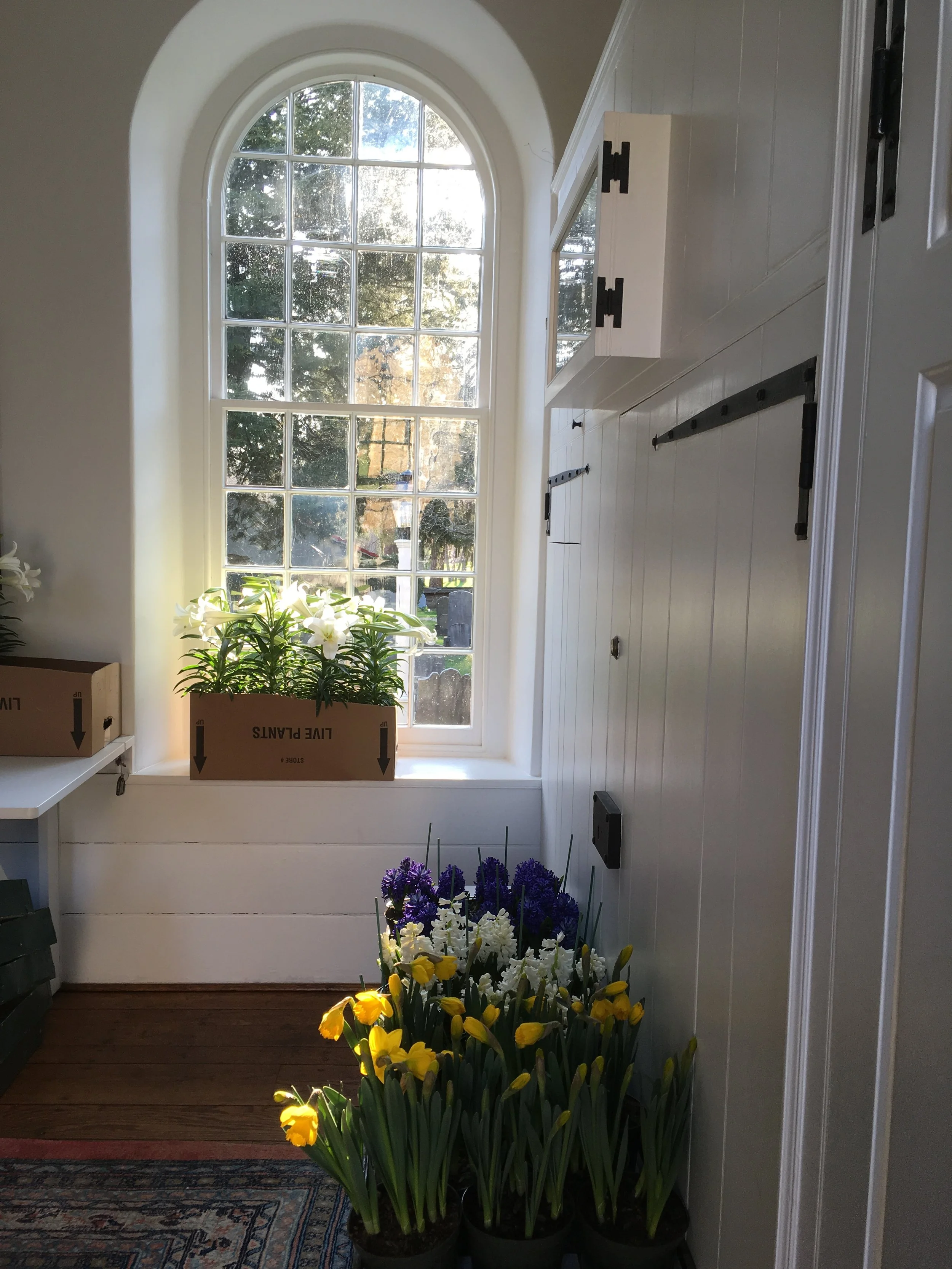
But I could smell something drifting in from the foyer off to the side of the small sanctuary. It was the smell of spring. Though I was sitting in the middle of the darkest day, the day of death and sorrow, life was waiting, ready to explode. I knew come Sunday this little space would be filled with purple, yellow, and white…I took a deep breath. Every sad thing, every evil, every loss, every misuse of power, every injustice…Sunday will come.
Lord, help us as we wait with our dry bones. And may it be soon.
God of life,There are days when the burdens we carry chafe our shoulders and wear us down;
when the road seems dreary and endless,
the skies grey and threatening;
when our lives have no music in them,
and our hearts are lonely,
and our souls have lost their courage.
Flood the path with light, we beseech you;
turn our eyes to where the skies are full of promise.
-Augustine
Fellowship with Jesus Christ is not a commitment to suffer as much as possible, but a commitment to listen with him to God's love without fear....
We are often tempted to "explain" suffering in terms of
"the will of God." Not only can this evoke anger and frustration, but also it is false. "God's will" is not a label that can be put on unhappy situations. God wants to bring joy, not pain; peace, not war; healing, not suffering. Therefore, instead of declaring anything and everything to be the will of God, we must be willing to ask ourselves where in the midst of our pains and sufferings we can discern the loving presence of God.